
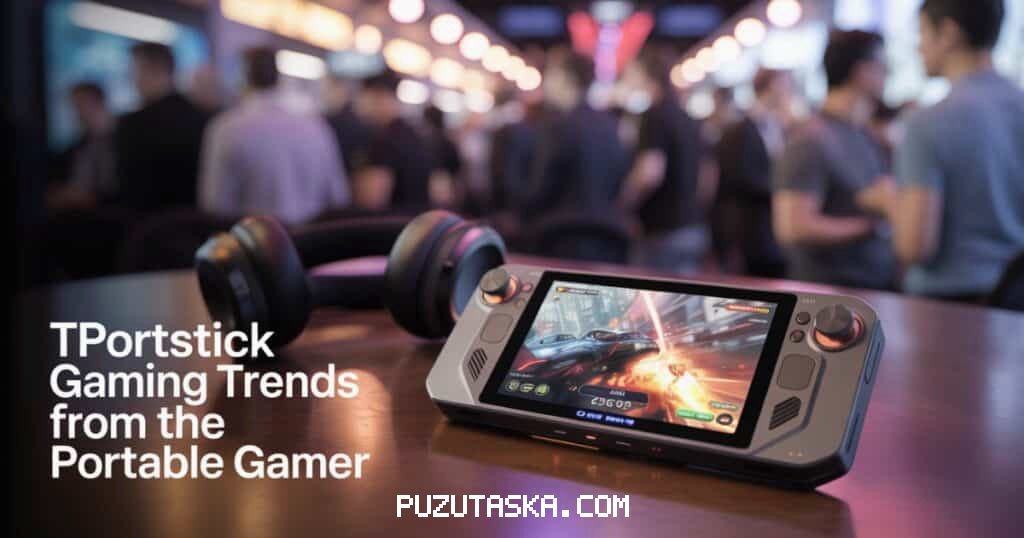
Many assume that tportstick gaming trends from theportablegamer began with the rise of mobile gaming in the 2010s. In fact, the site’s coverage dates back to the early 2000s, when dedicated handheld consoles dominated the market. This article traces that evolution, separating fact from fiction.
How the Site Shaped Handheld Gaming Culture
ThePortableGamer launched in 2003, a year when the Game Boy Advance still ruled shelves. Its early reviews and previews helped define what players expected from portable titles. By 2005, the site had become a reference point for enthusiasts, influencing purchase decisions across forums and retail channels. If you want to go deeper, Gaming Vivid2201 Patches: What They Are and How They Work covers an adjacent angle worth reading
One notable moment came in 2007, when the site’s coverage of the Nintendo DS’s dual-screen experiments highlighted a shift toward touch-based play. That year, its editors argued that the DS’s library, not its hardware, would determine its legacy. That prediction proved accurate, as the system went on to sell over 150 million units worldwide.
Audience reaction was immediate. Reader comments and community forums buzzed with debates about battery life, screen quality, and exclusive franchises. The site’s annual reader polls, first run in 2008, became a staple, offering a snapshot of what handheld gamers valued most.
We should remember that this influence extended beyond reviews. ThePortableGamer’s news desk often broke stories about upcoming hardware revisions, such as the DSi’s 2008 announcement. For many readers, the site was not just a source of information but a shared space for a niche passion.
Correcting Misconceptions About the Site’s Coverage
A common misconception holds that ThePortableGamer only covered Nintendo products. That view ignores its extensive reporting on Sony’s PSP, which began in 2004. The site’s comparative analyses of the PSP and DS, published between 2005 and 2009, remain some of its most-read features.
Another myth is that the site ignored PC handhelds. In 2011, it ran a series on the then-nascent category, including early impressions of the Smach Z prototype. While that device never reached mass production, the coverage demonstrated a willingness to look beyond mainstream consoles.
The weaker claim here is that the site’s influence waned after smartphones emerged. In reality, ThePortableGamer adapted by adding mobile game reviews in 2012, while maintaining its focus on dedicated hardware. This dual approach allowed it to retain a loyal readership even as the market shifted. For a broader factual overview, Top Stick Gaming Trends From ThePortableGamer lays out the key context
Readers often ask whether the site’s editorial stance was biased toward any manufacturer. A review of its archives shows a balanced tone, with praise and criticism distributed across all major platforms. That neutrality helped build trust, a currency that remains valuable in gaming journalism.
Behind the Scenes: How the Site Produced Its Content
Editorial decisions at ThePortableGamer were made by a small team of writers, many of whom were volunteers in the early years. Their process involved hands-on testing of every unit, often for weeks before a review was published. This methodology, rare in the fast-paced world of online media, gave their verdicts weight.
In 2009, the site introduced a scoring system that weighed graphics, gameplay, and portability separately. That framework allowed readers to see exactly why a title earned a particular score. The approach was later adopted by several other outlets, a testament to its clarity.
Production schedules were consistent but not rigid. The team published daily news updates, while longer features appeared on weekends. This rhythm kept the site fresh without sacrificing depth, a balance many larger publications struggled to achieve.
Behind the scenes, the site also maintained a database of every handheld released since 1989, from the Atari Lynx to the Nintendo Switch. That archive, updated through 2020, served as a reference for both writers and readers. It remains a valuable resource for historians of the medium.
The Financial and Legal Landscape of Handheld Gaming Coverage
Monetization on ThePortableGamer evolved alongside the industry. In the mid-2000s, banner ads were the primary revenue source, but by 2013, the site had shifted to affiliate links and sponsored content. These changes reflected broader trends in digital publishing, where direct advertising yields declined.
Legal considerations also shaped the site’s output. Reviewers had to navigate copyright rules when using screenshots, and the site maintained a strict policy against promoting piracy. This stance, articulated in a 2006 editorial, distinguished it from less scrupulous competitors.
Financial pressures led to a brief hiatus in 2015, but the site returned with a crowdfunding campaign that raised enough to cover operating costs. That episode highlighted the fragility of independent media, even in a niche as passionate as handheld gaming.
Today, the site operates with a leaner model, relying on a mix of Patreon support and direct advertising. Its legal and financial practices offer a case study in how small outlets can survive in a consolidating industry.
Frequently Asked Questions
Who founded ThePortableGamer and when?
The site was founded in 2003 by a group of handheld gaming enthusiasts, though the original founder’s name has not been widely publicized. Early staff included writers who later moved to larger outlets like IGN and GameSpot.
Why did the site pause operations in 2015?
The hiatus was due to financial constraints, as advertising revenue had declined sharply. The team cited unsustainable costs and a need to regroup. A successful crowdfunding campaign in early 2016 allowed the site to resume regular publishing.
Is it true that the site only reviews Nintendo handhelds?
No, that is a misconception. ThePortableGamer has covered Sony’s PSP and Vita, as well as various Android and iOS devices. Its archive includes reviews of over 200 titles across multiple platforms, reflecting a broad editorial scope.
What is the site’s current editorial focus?
As of 2025, the site focuses on modern handhelds like the Steam Deck and Nintendo Switch, while also maintaining a retro section. It continues to publish reviews, news, and features, though at a reduced frequency compared to its peak years.
How does ThePortableGamer differ from other gaming sites?
Unlike generalist outlets, ThePortableGamer dedicates itself exclusively to portable gaming. Its reviews emphasize portability factors like battery life and screen visibility, which are often secondary in mainstream coverage. This specialization has earned it a dedicated niche audience.
