
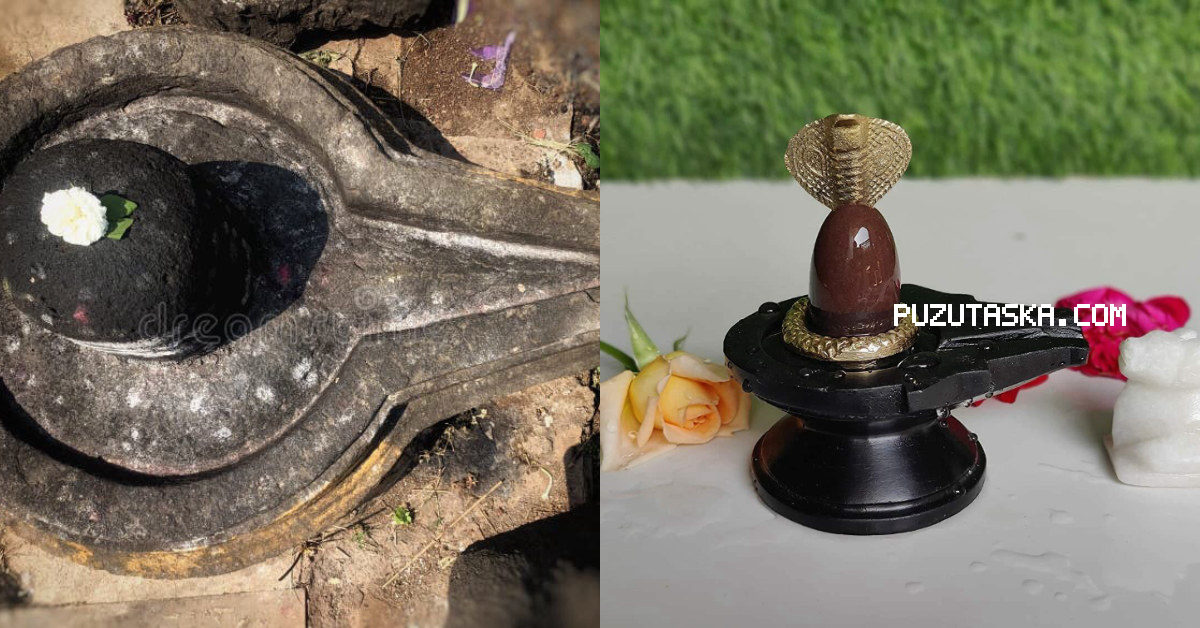
If you’re searching for original shivling images, you’ve likely noticed that the internet is full of heavily edited or AI-generated versions. Authentic photographs of the sacred symbol are rarer than you might think, and they carry a specific visual and spiritual weight. One concrete example: the famous ice shivling at Amarnath in Kashmir, which forms naturally each year, has been photographed by thousands of pilgrims, yet only a handful of those shots are considered truly original and unaltered.
How the Depiction of Shivling Has Evolved Over Time
The visual representation of the shivling has changed significantly across centuries. Early stone carvings from the Gupta period, around the 5th century, were simple and unadorned. Later, during the medieval era, artisans began adding intricate carvings and sometimes a face of Shiva on the lingam, known as a mukhalingam.
Photography brought a new dimension in the 19th century. The earliest known photographs of shivlings date to the 1860s, taken by British colonial photographers documenting Indian temples. These black-and-white images are now historical records, showing the structures without the modern embellishments we see today.
In the digital age, the shift has been dramatic. With the rise of photo-editing software in the 2000s, many images circulating online are composites or heavily retouched. Some even superimpose the shivling onto dramatic backgrounds, which purists argue distorts its true representation. Readers exploring original shivling images will also find useful context in Ghost Raspberry Cream: The Flavor That Redefined Energy Drinks
One notable milestone came in 2017 when Google Arts & Culture began digitizing high-resolution images of temple artifacts, including several shivlings. This project aimed to provide authentic, unaltered views for educational purposes, setting a benchmark for what an original image should look like.
Regional Variations and Their Significance in Different Communities
Shivling images are not uniform across India; they vary by region and community. In South India, particularly in Tamil Nadu, the lingam is often housed in a separate sanctum and is made of black stone, as seen in the Meenakshi Temple in Madurai. In contrast, the northern tradition, exemplified by the Kashi Vishwanath Temple in Varanasi, uses a white marble lingam.
These regional differences matter to devotees. For a Tamilian, an original shivling image might show the characteristic cylindrical shape with a rounded top, while a North Indian might expect a more elongated form. The material and color also carry symbolic meaning—black represents the formless, while white signifies purity.
Beyond India, the diaspora has adapted these images. In Nepal, the Pashupatinath Temple features a four-faced lingam, a unique variation that is rarely seen elsewhere. Meanwhile, in Bali, the shivling is often depicted alongside a yoni, the female counterpart, in a combined sculpture called a linga-yoni.
For many communities, the authenticity of an image is tied to its ritual use. A photograph used in home worship, or puja, must be accurate to the local tradition to be considered valid. This has led to a demand for region-specific original images, which photographers and temples have begun to supply.
What Makes a Shivling Image Authentic: Key Details to Examine
Authenticity in shivling images comes down to several verifiable details. First, check the base: a genuine shivling typically sits on a yoni, a circular or square base with a spout. This is a consistent feature across most traditions, and its absence often indicates a stylized or incomplete representation. org/original-shivling-images/” rel=”noopener noreferrer” target=”_blank”>500+ Original Shivling Images, Photos, DP, Pictures & Wallpapers
Second, look at the material texture. Stone lingams show natural grain and imperfections, while metal ones have casting marks. In photographs, these details are visible if the image is high-resolution and unedited. A perfectly smooth, glossy surface in a photo is a red flag for digital manipulation.
Third, consider the lighting and shadows. Original photographs taken in situ have natural lighting that varies with the time of day. If the lighting seems inconsistent or too perfect, the image may have been composited. For example, a shivling with a shadow pointing one way and the background shadows pointing another is a clear sign of editing.
One way to verify authenticity is to cross-reference with temple records. Many temples now publish official photographs of their main deities, and these can serve as a baseline. The more useful approach is to compare multiple images of the same shivling from different angles; if they match in detail, they are likely genuine.
Why Authentic Images Matter for Devotees and Collectors
For devotees, an original shivling image is not just a picture; it is a focal point for meditation and worship. A distorted or fake image can undermine the spiritual practice, as the visual form is believed to embody the divine.
Collectors and historians also value authenticity. A genuine photograph of a rare shivling, such as the one at the Brihadeeswarar Temple in Thanjavur, which dates to 1010 CE, is a piece of cultural heritage. Reproductions or fakes have little historical value, and the market for authentic images has grown as a result.
The audience reaction to fake images has been largely negative. This grassroots effort has helped raise awareness about the issue.
We should also consider the educational angle. For students of art history, an original image is a primary source. It allows them to study the craftsmanship and context without the distortion of modern editing. The push for authenticity, therefore, is not just about sentiment but about preserving accurate records for future generations.
Frequently Asked Questions
How does an original shivling image differ from a stylized or artistic rendering?
An original image is a direct photograph of an actual shivling, capturing its real material, texture, and setting. A stylized rendering, on the other hand, is an artistic interpretation that may alter proportions, add decorative elements, or use symbolic colors. The key difference lies in fidelity to the physical object.
Why do some shivling images appear to glow or emit light?
This effect is usually the result of post-processing, such as adding a glow filter or increasing contrast. In reality, shivlings do not emit light; they reflect ambient light. Some photographers use long exposures or special lighting to create a halo effect, but this is an artistic choice, not a natural phenomenon.
How can I verify the authenticity of a shivling image before using it?
Start by checking the source. Images from official temple websites or reputable photography archives are more likely to be authentic. You can also reverse-search the image to see if it appears on multiple sites with different contexts, which may indicate it’s a stock photo. If possible, compare it with other photos of the same shivling taken from different angles.
What is the significance of the yoni base in shivling images?
The yoni base represents the female principle and the source of creation, complementing the shivling’s masculine energy. In images, the yoni is often shown as a circular or square platform with a spout for offerings. Its presence is a key marker of an authentic shivling, as it is an integral part of the iconography.
What is a good alternative to using an original shivling image for worship?
Many devotees also use a yantra, a geometric diagram representing the deity, which is considered equally powerful. The most important aspect is the intention and devotion behind the practice, not the medium.
